
Every day, millions of calls are made and received across Pakistan. Most of them are routine. But a portion of them involve unknown numbers, suspicious contacts, and people who do not identify themselves. For the person on the receiving end, this creates uncertainty. Who is this? Should I answer? Is this safe?
The answer to those questions lies in SIM data. Every mobile number active in Pakistan is registered under a real identity. That registration data exists. The question is whether you can access it quickly and easily when you need it.
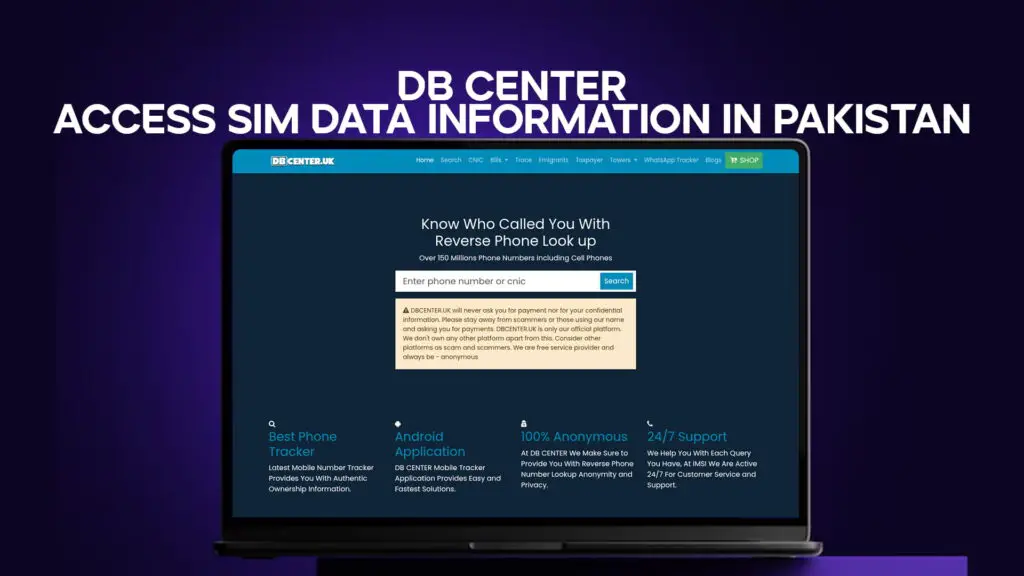
DB Center makes that possible. It is a reverse phone lookup platform with a database of over 150 million phone numbers, including cell phones. For users in Pakistan, it provides access to SIM registration data tied to mobile numbers, helping you identify unknown callers, verify contacts, and protect yourself from fraud. This article walks through everything you need to know about how SIM data works in Pakistan and how DB Center gives you access to it.
What Is SIM Data and Why Does It Exist?
SIM data refers to the registration information tied to a SIM card. When someone activates a mobile number in Pakistan, they are required to provide identity details before the SIM becomes active. This process creates a record that links the phone number to the person who registered it.
That record is what DB Center taps into. It includes the registered owner’s name, the CNIC number used during registration, the telecom network the SIM belongs to, and often the region where the registration took place.
SIM data exists because Pakistan’s telecom regulator, the Pakistan Telecommunication Authority, requires it. The PTA introduced mandatory SIM registration to bring accountability to the mobile sector. Before these rules were in place, anyone could buy and activate a SIM with no paper trail. This made it easy for criminals, scammers, and fraudsters to use mobile phones without being traceable.
Mandatory registration changed that. Now, every active SIM in the country should be linked to a verified identity. The data that comes from that verification process is what makes reverse phone lookup tools like DB Center functional and useful.
How SIM Registration Works in Pakistan
Understanding how SIM registration works helps you understand what kind of data DB Center can return when you run a search.
When someone buys a new SIM in Pakistan, the mobile network requires them to verify their identity through a biometric process. The customer provides their CNIC and places their finger on a biometric scanner connected to NADRA’s database. NADRA confirms that the fingerprint matches the CNIC, and only then does the network activate the SIM.
This process applies to all major networks operating in Pakistan, including Jazz, Telenor, Zong, Ufone, and SCO. No network is exempt from these requirements. They are set and enforced by the PTA.
Once the biometric verification is complete, the SIM registration data is stored. The mobile number gets linked to the CNIC and the verified name of the person who registered it. This is the data that feeds into lookup databases like the one DB Center uses.
There is also a cap on how many SIMs a single CNIC can have active at one time. This limit was set to prevent one person from controlling dozens of numbers for fraudulent purposes. Checking whether a number is registered within normal parameters, or whether it appears to be part of an unusual registration pattern, is something DB Center can help with.
Who Needs Access to SIM Data?
The need to access SIM data is not limited to any one type of person or situation. It comes up across a wide range of everyday circumstances.
Individuals dealing with unknown callers are the most obvious users. If a number keeps calling you and you cannot identify it, a quick lookup on DB Center tells you who it belongs to. This helps you decide whether to answer, ignore, or report the number.
Fraud and scam victims need SIM data to build a picture of who targeted them. Scam calls in Pakistan often come from numbers that look legitimate. Identifying the registered owner of a number used in a scam is the first concrete step before filing a complaint.
Business owners and freelancers use SIM data to verify new clients or suppliers. When someone contacts you through an unknown number claiming to represent a company, checking the registration details confirms whether the number matches the identity they claimed.
Parents and guardians check SIM data to monitor unfamiliar numbers appearing in their children’s call logs or messages. This is a practical safety measure rather than an invasion of privacy.
Landlords and property owners sometimes verify tenant or buyer contact numbers before entering into agreements. Confirming that a number is registered to the person who provided it adds a basic layer of trust.
HR professionals may run basic checks on candidate contact numbers as part of background verification, particularly for roles involving sensitive responsibilities.
In every case, the need is practical and the information sought is straightforward. DB Center delivers it without requiring users to navigate complicated processes or wait for official responses.
Accessing SIM Data Through DB Center
DB Center is built for simplicity. The platform is designed so that anyone, regardless of technical ability, can run a search and get results within seconds.
Here is how the process works from start to finish.
Open DB Center in any web browser. The platform loads quickly on both mobile and desktop, so you can use it from wherever you are.
Find the search bar on the homepage. It is the primary feature of the page and is easy to spot.
Enter the phone number you want to look up. For Pakistani numbers, make sure to include the country code. Pakistani numbers use the +92 code, so a number like 0321-4567890 should be entered as +923214567890.
Press the search button. DB Center will process the request and check the number against its database of over 150 million records.
Read the results. A successful search will return the name of the person the SIM is registered to, along with CNIC-linked details, the mobile network, and registration region information where available.
If a number returns no results, it may be new, unregistered, or not yet indexed in the current database version. The database is updated on an ongoing basis, so searching again after a short time may produce results that were not available earlier.
The whole process takes less than a minute. There is no login required, no fee for basic searches, and no complicated steps between you and the information you need.
The Connection Between SIM Data and CNIC Verification
The reason SIM data in Pakistan is so useful for identity verification comes down to how tightly it is connected to the CNIC system.
NADRA’s biometric database holds the fingerprint records of Pakistani citizens. When a SIM is registered, the biometric verification process runs the customer’s fingerprint against this database. A match must be confirmed before the SIM activates. This means that the name linked to a SIM registration is not just a name someone typed in. It is a name that was verified against a real identity document and biometric record.
This is a higher standard of identity verification than most countries require for SIM registration. It means that when DB Center returns a name for a Pakistani mobile number, that name has gone through a formal verification process. The connection between the number and the person is real and documented.
For users who need to verify who they are dealing with, this is valuable. It is not a guess or an estimate. It is a name tied to a verified national identity.
SIM Data Fraud and How to Spot It
Despite the strong verification system, SIM data fraud does happen in Pakistan. Knowing what it looks like helps you use DB Center more effectively.
Unauthorized SIM registration occurs when someone uses a stolen or copied CNIC to register a SIM without the real owner’s knowledge. The real person has no idea their identity has been used until they discover the SIM through a check or encounter a problem tied to it.
Fake biometric verification has been documented in some cases where corrupt SIM sellers bypassed proper procedures. These SIMs exist in the system but were not properly verified, meaning the registration data may be inaccurate.
SIM swapping is when a fraudster convinces a mobile network to transfer an existing number to a new SIM under their control. Once they have the number, they can intercept OTPs and access banking or account services linked to that number.
Multiple SIMs under one CNIC beyond the legal limit suggests something unusual. If the same CNIC appears connected to a large number of active SIMs, it is worth flagging to the PTA.
DB Center helps you spot some of these irregularities. If the name returned for a number does not match who the caller claimed to be, that is a red flag. If a number linked to your CNIC appears in a search and you did not register it, that is a sign of unauthorized use.
What to Do With the Information You Find
Finding SIM data is the first step. Acting on it correctly is what makes the information useful.
If a search confirms that a number belongs to someone you recognize or a legitimate business, you can respond to the contact accordingly. No further action is needed.
If the registration details raise concerns because the name does not match what the caller claimed, do not engage further. Block the number and consider reporting it to the PTA or your mobile network if the call involved any attempt at fraud or deception.
If you find a SIM registered under your own CNIC that you did not activate, take these steps in order. Contact your mobile network provider and request the SIM be blocked immediately. File a formal complaint with the PTA through their online complaint portal. If the SIM was used for any fraudulent activity, file a report with the Federal Investigation Agency’s Cyber Crime Wing or your local police.
If you found the number through a harassment or threat situation, the registered name and CNIC details you obtained give law enforcement something concrete to work with. A complaint backed by identity information is far easier to act on than one with only an unknown number.
Keeping Your Own SIM Data Secure
Using DB Center to look up other numbers is one side of the equation. Keeping your own SIM data secure and accurate is the other.
Make a habit of checking which SIMs are registered under your CNIC. The easiest way is to text your CNIC number to 668. This service, provided through the PTA, sends back a list of all active SIMs tied to your identity across all networks. Review the list and identify any numbers you did not register.
Search your own mobile number on DB Center occasionally. This tells you whether the registration information in the database reflects your actual details. If something looks off, contact your network provider to correct the record.
Keep your CNIC safe and avoid sharing the number unnecessarily. Your 13-digit CNIC is the key to your SIM registrations and many other services. Treat it with the same care you would give a password.
If your CNIC is lost or stolen, report it to NADRA immediately and request a replacement. This creates a record of the loss and can help protect you if someone tries to use the lost card for SIM registration or other purposes.
Why DB Center Is the Right Tool for Pakistani Users
Pakistan has a specific telecom registration system that most global tools do not account for. International reverse phone lookup services may be able to tell you that a number originates from a Pakistani network, but they cannot tell you who it is registered to or what CNIC is linked to it. That information exists only in databases built around Pakistan’s SIM registration data.
DB Center is built with this in mind. Its database includes over 150 million phone numbers with specific coverage of Pakistani mobile registrations. The results it returns for Pakistani numbers reflect the actual registration data produced by the biometric SIM activation process.
This makes it significantly more useful for Pakistani users than any generic lookup tool. Instead of getting a vague result that confirms a number is from Pakistan, you get the registered name and CNIC-linked details that tell you who actually owns the number.
The platform is also accessible from anywhere. Whether you are using a smartphone on a mobile connection or a laptop on Wi-Fi, DB Center works the same way. It is not region-locked and does not require a Pakistani IP address to function. You can use it from wherever you happen to be when you need to run a search.
Final Thoughts
SIM data in Pakistan is more than a technical record. It is the foundation of accountability in the country’s mobile communication system. Every number active in Pakistan should be tied to a real person through a verified registration process. That connection exists for a reason, and it is available to help people protect themselves.
DB Center puts that data in your hands. It gives you fast, simple access to SIM registration information for over 150 million phone numbers, including the mobile numbers that matter most for everyday Pakistanis. Whether you need to identify an unknown caller, verify a new contact, protect yourself from fraud, or check whether your own identity has been misused in the telecom system, DB Center delivers the information you need without unnecessary complexity.
Knowing who is behind a phone number should not be difficult. With DB Center, it is not.
When you search a Pakistani mobile number on DB Center, you can access the registered owner’s name, CNIC-linked details tied to the SIM registration, the mobile network the number belongs to, and in many cases the region where the SIM was registered.
DB Center updates its database regularly to reflect new SIM registrations and changes in existing records. While most searches return current information, very recently issued SIMs or numbers involved in recent transfers may not yet be indexed. Searching again after a few days often resolves this.
DB Center helps by letting you search numbers that may be linked to your identity. For a full list of all SIMs registered under your CNIC, you can also text your CNIC number to 668, which returns a complete list from the PTA across all networks.
Yes. DB Center’s database includes numbers from all major Pakistani networks including Jazz, Telenor, Zong, Ufone, and SCO. The search results are not limited to any one network, so you can look up numbers regardless of which provider they belong to.
A mismatch between the registered name and what the caller claimed is a red flag. Do not share personal information or engage further with that number. If the call involved any attempt at fraud or deception, report the number to your mobile network provider and file a complaint with the PTA through their official portal.