
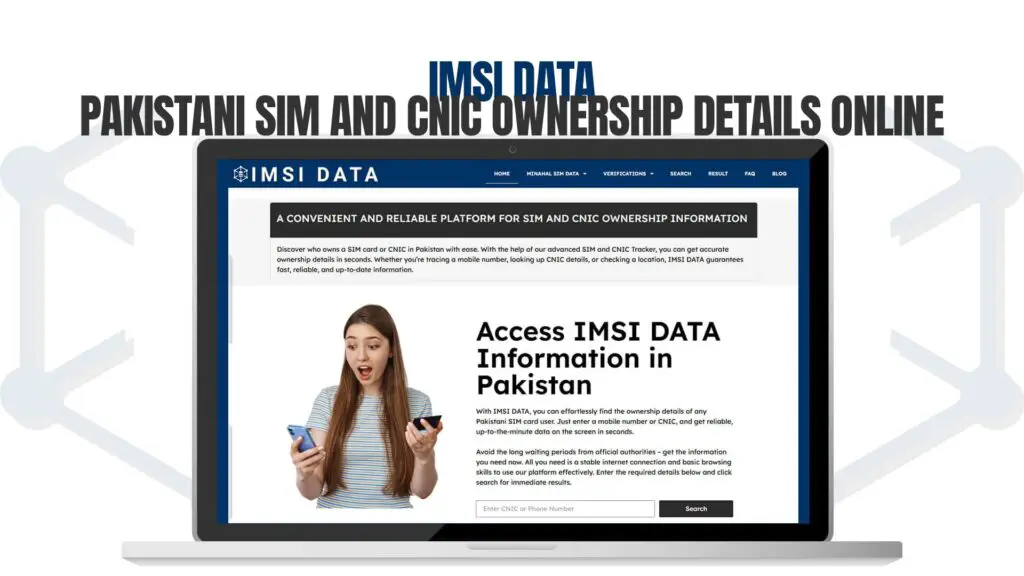
Knowing who owns a mobile number or checking SIM card details has become increasingly important. Whether you’re verifying a business contact, confirming caller identity, or ensuring security, having access to reliable information is essential. This is where IMSI data comes into play.
IMSI stands for International Mobile Subscriber Identity. It’s a unique number that identifies every mobile subscriber in the world. In Pakistan, this data is connected to CNIC (Computerized National Identity Card) records, creating a secure database that links mobile numbers to their registered owners.
Many people in Pakistan search for ways to verify SIM ownership or check which mobile numbers are registered under a specific CNIC. This need arises for various legitimate reasons – from recovering lost contacts to verifying business partners, or simply ensuring that unauthorized numbers aren’t registered under your name.
IMSIData provides a reliable platform where Pakistani citizens can access this information legally and securely. The platform offers PTA-approved IMSI information, ensuring that all data provided follows government regulations and privacy standards.
What is IMSI Data and Why Does It Matter?
IMSI data represents the core identification system for mobile subscribers worldwide. Think of it as a digital fingerprint for your SIM card. Every time you use your mobile phone, this unique identifier works in the background, connecting you to the network.
In Pakistan, the government requires all SIM cards to be registered against valid CNIC numbers. This system was implemented to enhance security and reduce misuse of mobile services. The connection between IMSI data and CNIC information creates a transparent system where mobile ownership can be verified.
Understanding IMSI data is important for several practical reasons. First, it helps protect your identity. By checking which SIM cards are registered under your CNIC, you can ensure nobody has fraudulently registered a number in your name. Second, it assists in verification processes when you need to confirm someone’s contact details. Third, it provides peace of mind knowing that the mobile ecosystem operates with proper accountability.
The technical side of IMSI data involves complex telecommunications infrastructure, but accessing this information has been made simple through dedicated platforms. You don’t need to understand the technical details to benefit from IMSI data services.
How CNIC and SIM Registration Work in Pakistan
Pakistan’s telecom sector operates under strict regulations set by the Pakistan Telecommunication Authority (PTA). When you purchase a SIM card in Pakistan, the law requires you to register it against your CNIC. This process, called biometric verification, links your identity directly to your mobile number.
The registration process involves visiting an authorized franchise or retailer with your original CNIC. The representative takes your thumbprint and scans your CNIC, creating a permanent record in the national database. This information is then stored and can be accessed through approved channels.
Each Pakistani citizen is allowed to register a limited number of SIM cards under their CNIC. This limit exists to prevent misuse and ensure proper tracking of mobile communications. If you exceed this limit, you may face difficulties activating new numbers.
The CNIC-SIM linkage serves multiple purposes. It helps law enforcement agencies track criminal activities, assists in emergency situations where identity confirmation is needed, and protects citizens from identity theft. When someone registers a SIM fraudulently under your name, you have the right to report it and have it deactivated.
Many Pakistanis are unaware of how many SIM cards are registered under their name. Some people might have forgotten about old numbers they registered years ago. Others might have had their CNIC information misused without their knowledge. This is why checking your SIM ownership details regularly is important.
The Role of PTA in Managing IMSI Data
The Pakistan Telecommunication Authority (PTA) serves as the regulatory body overseeing all telecommunications in Pakistan. One of their primary responsibilities involves managing the database that connects CNIC information with mobile numbers.
PTA maintains strict standards for data protection and privacy. They ensure that access to IMSI and CNIC information follows legal guidelines. Only authorized platforms and services can provide this information to citizens. This regulatory framework protects people’s privacy while maintaining transparency.
The authority has implemented several systems to make IMSI data accessible to legitimate users. They’ve established protocols that allow citizens to verify their own information and check which numbers are registered under their CNIC. These systems operate within legal boundaries and respect privacy rights.
PTA approval is crucial when choosing a platform to check IMSI data. Platforms that operate without proper authorization might provide inaccurate information or misuse personal data. Always verify that any service you use has proper PTA approval and follows established regulations.
The regulatory body also handles complaints related to unauthorized SIM registrations. If you discover that someone has registered a SIM card under your CNIC without permission, PTA provides mechanisms to report and resolve such issues.
Why People Need to Check SIM Ownership Information
There are numerous legitimate reasons why someone might need to access SIM ownership information. Understanding these reasons helps clarify why platforms providing this service are valuable.
Personal Security: Many people check their CNIC records to ensure no unauthorized numbers are registered under their name. Identity theft is a real concern, and fraudulent SIM registrations can lead to serious problems. By regularly checking your records, you can catch and report any suspicious activity early.
Lost Contact Recovery: Sometimes you might have an old number stored somewhere but can’t remember whose it is. Checking ownership details helps you identify contacts you’ve lost touch with. This is particularly useful when you find old business cards or written phone numbers.
Business Verification: When starting a business relationship or dealing with new clients, verifying their contact information adds a layer of security. Businesses often need to confirm that the person they’re dealing with is legitimate and using properly registered contact numbers.
Legal Matters: In legal situations, confirming mobile number ownership can be crucial. Whether it’s for court cases, property transactions, or official documentation, having verified contact information matters.
Family Safety: Parents might want to verify the numbers their children are communicating with. While respecting privacy, ensuring safety sometimes requires checking who owns certain contact numbers.
Preventing Fraud: Before engaging in online transactions or marketplace dealings, checking the seller’s or buyer’s mobile registration can help identify potential scammers. Legitimate sellers typically have properly registered numbers.
How IMSIData Makes Information Access Easy
IMSIData has been designed with user experience in mind. The platform understands that not everyone is tech-savvy, so they’ve created a simple, straightforward interface that anyone can use.
When you visit the platform, you’ll find a clean, organized website that doesn’t overwhelm you with complicated options. The search function is prominently displayed, allowing you to quickly enter either a mobile number or CNIC number to begin your search.
The platform operates on a simple principle: provide accurate, PTA-approved information in the most accessible way possible. Unlike complex government portals or confusing third-party services, IMSIData focuses on making the process as smooth as possible.
One of the key advantages is the speed of information retrieval. Traditional methods of checking SIM ownership might involve visiting PTA offices, filling out forms, and waiting for responses. IMSIData provides this information online, saving you time and effort.
The platform also offers free browsing, allowing you to explore and understand how the system works before committing to any searches. This transparency builds trust and helps users feel comfortable using the service.
Security is paramount when dealing with personal information. IMSIData implements proper encryption and security protocols to ensure that your searches remain private and your data stays protected. The platform doesn’t store unnecessary information or share your search history with third parties.
Understanding the Legal Framework of IMSI Data Access
Accessing IMSI and CNIC information isn’t something that should be taken lightly. Pakistan has specific laws and regulations governing who can access this data and for what purposes.
The legal framework exists to balance two important needs: protecting individual privacy and maintaining security. Citizens have the right to check information related to their own CNIC and verify mobile numbers for legitimate purposes. However, this doesn’t mean anyone can access anyone else’s private information without proper authorization.
PTA regulations clearly define what constitutes legal access to IMSI data. Generally, individuals can check which numbers are registered under their own CNIC. They can also verify mobile number ownership for legitimate business, legal, or security purposes. What’s not allowed is using this information for harassment, stalking, or other illegal activities.
IMSIData operates within this legal framework. They don’t provide unrestricted access to all database information. Instead, they offer specific services that comply with privacy laws while meeting legitimate user needs.
Understanding these legal boundaries is important for users. When you use IMSI data services, you should do so responsibly and for legal purposes only. Misusing this information can lead to legal consequences and violates the trust that makes these platforms possible.
The government continues to update and refine these regulations as technology evolves. Staying informed about current laws helps ensure you’re using these services appropriately.
The Technology Behind IMSI Data Systems
While users don’t need to understand complex technical details, knowing a bit about how IMSI data systems work can be helpful. This understanding builds confidence in the accuracy and reliability of the information provided.
IMSI data is generated and stored by mobile network operators. Every time a SIM card is activated, the operator records the IMSI number along with the associated CNIC information. This data is stored in secure databases that comply with industry standards.
These databases are interconnected through systems managed by PTA and the network operators. When you make a query through an approved platform, the system searches these databases to retrieve the relevant information. The entire process happens in seconds, despite searching through millions of records.
The technology ensures data accuracy through multiple verification points. When a SIM is registered, biometric verification confirms the person’s identity. This information is cross-checked with NADRA (National Database and Registration Authority) records to ensure the CNIC is valid and belongs to the person registering the SIM.
Modern database systems use advanced security measures to protect this sensitive information. Encryption ensures that data remains secure during transmission and storage. Access controls limit who can view or modify information. Regular audits verify that the system operates correctly and securely.
Updates to the database happen continuously as new SIMs are registered or old ones are deactivated. This dynamic system ensures that the information you access is current and reflects the actual state of SIM registrations.
Common Problems Solved by IMSI Data Access
Having access to IMSI and CNIC ownership information solves numerous practical problems that Pakistanis face regularly. Understanding these solutions helps you appreciate the value of these services.
Unauthorized SIM Registrations: This is perhaps the most critical problem solved by IMSI data access. Many people discover that someone has registered SIM cards under their CNIC without permission. This might happen through document theft, corrupt shop practices, or data breaches. By checking your records regularly, you can identify and report these unauthorized registrations quickly.
Exceeded SIM Limits: Sometimes people forget how many SIM cards they’ve registered over the years. When they try to get a new number, they discover they’ve reached the maximum limit. Accessing your IMSI data helps you see all registered numbers, allowing you to decide which old, unused numbers to deactivate.
Verification for Transactions: Online marketplaces, property deals, and various transactions require trust between parties. Being able to verify that a mobile number is properly registered and belongs to a real person reduces fraud risk significantly.
Recovering Account Access: Many online services use mobile numbers for verification. If you’ve lost access to an old account and can’t remember which number was registered, checking IMSI data can help you identify the correct number and regain access.
Family Member Verification: Parents concerned about who their children are communicating with can use this information responsibly to ensure their kids’ safety without being overly invasive.
Business Due Diligence: Companies conducting background checks on potential employees, partners, or clients can verify contact information as part of their due diligence process.
How to Use IMSI Data Services Safely and Responsibly
Using IMSI data services comes with responsibilities. Following best practices ensures you protect both your own privacy and respect others’ rights.
Use Legitimate Platforms Only: Always choose PTA-approved platforms for accessing IMSI data. Unauthorized services might provide inaccurate information, steal your data, or involve you in illegal activities. Verify that any platform you use operates legally and has proper authorization.
Protect Your Own Information: When using these services, you’ll need to provide some information for verification. Only share necessary details, and never provide sensitive information like passwords or complete CNIC numbers to unverified platforms.
Respect Privacy Boundaries: Just because you can access certain information doesn’t mean you should use it inappropriately. Use IMSI data for legitimate purposes only. Don’t use it to harass others, stalk people, or engage in any illegal activities.
Keep Your CNIC Secure: The best way to prevent unauthorized SIM registrations is protecting your CNIC. Never share clear copies of your CNIC unnecessarily. When providing copies for legitimate purposes, mark them as “for specific purpose only” to prevent misuse.
Regular Monitoring: Make it a habit to check your SIM registrations periodically. Quarterly checks are a good practice. This helps you catch any problems early before they become serious issues.
Report Issues Immediately: If you discover unauthorized registrations, report them to PTA immediately through proper channels. Don’t delay, as fraudulent SIM cards can be used for illegal activities that might be traced back to your CNIC.
Educate Others: Share knowledge about IMSI data services with family and friends. Many people don’t know they can check their SIM registrations or don’t understand the importance of doing so.
The Connection Between IMSI Data and Digital Pakistan
Pakistan’s journey toward digitalization involves multiple initiatives aimed at bringing transparency and efficiency to various sectors. IMSI data and its accessibility play a crucial role in this digital transformation.
The government’s Digital Pakistan vision includes making public services more accessible online. Allowing citizens to check their SIM registrations without visiting physical offices aligns perfectly with this goal. It reduces bureaucracy, saves time, and empowers people with information about their own records.
This transparency builds trust in digital systems. When people can easily verify their information and ensure accuracy, they feel more confident participating in digital services. This confidence is essential for broader digital adoption across Pakistan.
IMSI data access also supports financial inclusion efforts. Many digital financial services rely on mobile numbers for verification. Ensuring that mobile numbers are properly registered and verified helps these services operate securely, encouraging more people to adopt digital financial tools.
The system demonstrates how technology can solve real problems while maintaining security standards. It shows that digitalization doesn’t mean sacrificing privacy or security. Instead, properly implemented digital systems can enhance both convenience and protection.
As Pakistan continues developing its digital infrastructure, services like IMSI data access will become increasingly important. They form the foundation for more advanced services that require reliable identity verification.
Protecting Yourself from SIM-Related Fraud
SIM-related fraud is a growing concern in Pakistan and worldwide. Understanding how these frauds work and how to protect yourself is essential in today’s connected world.
Common Fraud Types: Fraudsters might register SIM cards under stolen CNICs to commit crimes, avoiding detection. They might use these numbers for scams, harassment, or even serious crimes. Sometimes, shop employees register extra SIM cards under customer CNICs without permission, later selling them or using them fraudulently.
Warning Signs: Unexpected messages or calls about SIM registrations you didn’t make, difficulty getting new SIM cards because you’ve “reached your limit,” or notices from authorities about activities linked to your CNIC that you don’t recognize.
Prevention Strategies: Keep your CNIC physically secure. Never leave copies lying around. When providing copies, mark them clearly for the specific purpose. Be present during SIM registration and watch the entire process. Don’t let shop employees complete registration away from your view.
Regular Checks: Make checking your SIM registrations a routine practice. Set a reminder to check quarterly. Early detection of fraudulent registrations prevents bigger problems later.
Immediate Action: If you discover fraud, act immediately. Contact PTA through their official helpline. File a complaint with your network operator. Report to FIA cyber crime if the fraud involves online criminal activity. The faster you act, the less damage fraudsters can cause.
Document Everything: Keep records of all your legitimate SIM registrations. Note dates, locations, and any documentation. This helps when you need to prove which registrations are authentic and which are fraudulent.
The Benefits of Regular IMSI Data Monitoring
Making IMSI data checking a regular habit provides numerous benefits beyond just catching fraud. This proactive approach to managing your digital identity pays dividends in multiple ways.
Peace of Mind: Knowing that your CNIC isn’t being misused allows you to rest easy. In our interconnected world where identity theft is common, this assurance is valuable. Regular monitoring means you’re in control of your digital footprint.
Early Problem Detection: Problems caught early are easier to resolve. If someone registers an unauthorized SIM under your name, discovering it within weeks is much better than finding out months or years later after damage has been done.
Better Record Keeping: Regular checks help you maintain accurate records of your own SIM cards. You’ll know which numbers you have, when they were registered, and which ones you no longer use. This information is helpful for various official procedures.
Simplified Official Processes: When you need to provide information for official purposes, knowing exactly which numbers are registered under your CNIC makes processes smoother. You won’t have surprises during background checks or official verifications.
Financial Protection: Many financial frauds involve unauthorized SIM cards. Monitoring helps prevent these frauds before they affect your finances. Mobile banking and digital wallets rely on mobile numbers, making SIM security crucial for financial security.
Professional Reputation: For business professionals, ensuring all their registered numbers are legitimate and accounted for protects their professional reputation. You don’t want unauthorized numbers linked to your identity engaging in unprofessional or illegal activities.
Understanding Data Privacy in IMSI Services
Privacy concerns are natural when dealing with personal information like IMSI and CNIC data. Understanding how privacy is protected in these systems helps users feel confident using these services.
What Information is Protected: Your CNIC number, full name, address, and other personal details are sensitive information. Legitimate IMSI data platforms don’t publicly display all these details. They provide verification services while maintaining necessary privacy protections.
Access Controls: Not all information is available to everyone. Generally, you can see full details about your own registrations. For others’ numbers, you might only verify basic ownership without accessing complete personal information. This balance maintains both transparency and privacy.
Data Encryption: Legitimate platforms use encryption to protect data during transmission and storage. This means even if someone intercepts the communication, they can’t read the sensitive information.
Legal Protections: Pakistan’s laws protect personal data from misuse. Companies providing IMSI data services must comply with these laws. They can face serious penalties for unauthorized data sharing or privacy violations.
Your Rights: As a citizen, you have rights regarding your personal information. You can check your own data, request corrections if information is wrong, and report privacy violations. Understanding these rights helps you protect your information.
Responsible Platform Selection: Privacy protection starts with choosing the right platform. PTA-approved services have met privacy requirements. They’ve demonstrated that they handle data responsibly and follow established protocols.
The Future of IMSI Data Services in Pakistan
The landscape of IMSI data and telecommunications continues evolving. Understanding future trends helps prepare for coming changes and opportunities.
Enhanced Integration: Future systems will likely integrate IMSI data with more services. Digital identity systems might incorporate mobile verification more thoroughly. This integration will make many official processes smoother and more secure.
Improved Accessibility: As technology advances, accessing IMSI information will become even easier. Mobile apps, automated verification systems, and better user interfaces will make these services more user-friendly.
Artificial Intelligence: AI might help identify suspicious patterns in SIM registrations. These systems could automatically flag potential fraud, alerting both authorities and affected individuals quickly. Machine learning could improve fraud detection significantly.
Blockchain Technology: Some experts suggest blockchain could enhance security and transparency in telecommunications databases. This technology might make the system more tamper-proof and provide better audit trails.
International Coordination: As people travel and use services internationally, cross-border coordination of mobile identity systems might improve. This could help with international verification and reduce global mobile fraud.
Biometric Advancements: Current biometric verification might expand beyond fingerprints to include facial recognition or other methods. These additions would make the system even more secure and harder to fool.
Real-Time Updates: Future systems might provide real-time notifications when new SIM cards are registered under your CNIC. This immediate alert system would catch fraud faster than periodic manual checks.
How IMSIData Stands Out Among Similar Services
While several services claim to provide IMSI and CNIC information, not all are created equal. Understanding what makes a service reliable helps you make informed choices.
PTA Approval: The most critical factor is official approval. IMSIData operates with proper authorization, ensuring the information provided is legitimate and the service follows legal requirements. Many unauthorized services don’t have this approval.
User-Friendly Interface: Complex systems frustrate users. IMSIData focuses on simplicity, making information accessible even to those with limited technical knowledge. The clean design and straightforward process save time and reduce confusion.
Accurate Information: Accuracy matters when dealing with identity verification. IMSIData connects to authorized databases, ensuring the information provided is current and correct. Unauthorized services might offer outdated or incorrect data.
Data Security: Handling sensitive information requires proper security measures. The platform implements industry-standard encryption and security protocols, protecting user privacy while providing needed information.
Customer Support: When you have questions or face issues, responsive customer support makes a difference. Reliable platforms provide assistance to help users navigate any problems.
Transparent Operations: Good services are upfront about what they offer, how they work, and what they can and cannot do. This transparency builds trust and helps users understand exactly what they’re getting.
Regular Updates: Telecommunications databases change constantly. Reliable services maintain up-to-date connections to these databases, ensuring the information you receive reflects current registrations.
Step-by-Step Guide to Checking Your SIM Ownership
For those new to IMSI data services, a simple guide makes the process less intimidating. Here’s how to check your SIM ownership information easily.
Step One – Visit the Platform: Open your web browser and go to the IMSIData website. The homepage presents a clear interface designed for easy navigation. You don’t need to create an account or log in for basic searches.
Step Two – Choose Your Search Type: You have two main options: search by mobile number or search by CNIC. If you want to see all numbers registered under your CNIC, choose the CNIC search option. If you want to verify who owns a specific number, use the mobile number search.
Step Three – Enter Information: Carefully type in either the mobile number or CNIC number. Double-check for accuracy, as incorrect numbers will produce no results or wrong results. Make sure you include all digits and use the correct format.
Step Four – Initiate Search: Click the search button to begin the query. The system will search the connected databases for matching records. This process typically takes only a few seconds, though sometimes it might take a bit longer depending on server load.
Step Five – Review Results: The system displays results clearly, showing relevant information about the mobile number or CNIC you searched. Review this information carefully. Make note of any unexpected or suspicious entries.
Step Six – Take Action if Needed: If you discover unauthorized registrations, the platform typically provides guidance on next steps. This might include contact information for PTA or your network operator to report issues.
Step Seven – Keep Records: Take screenshots or write down important information for your records. This documentation helps if you need to reference this information later or report problems to authorities.
Real-Life Scenarios Where IMSI Data Helps
Understanding practical applications through real examples helps illustrate why IMSI data services are valuable for everyday Pakistanis.
Scenario One – The Job Seeker: Ahmed was applying for a government job that required background verification. The department needed to verify all mobile numbers registered under his CNIC. Ahmed used IMSI data services to check his registrations. He discovered two old numbers he’d forgotten about from years ago. He deactivated these unused numbers, cleaning up his records before the official verification. This proactive step made his background check smooth and demonstrated his responsibility to potential employers.
Scenario Two – The Concerned Parent: Fatima noticed her teenage daughter receiving calls from an unknown number that seemed suspicious. Instead of confronting her daughter and possibly damaging trust, she first verified the number’s ownership. The information showed it was a properly registered number belonging to a classmate’s family. This knowledge let her address the situation appropriately without overreacting.
Scenario Three – The Identity Theft Victim: Hassan routinely checked his SIM registrations quarterly. During one check, he discovered three numbers registered under his CNIC that he didn’t recognize. He immediately reported these to PTA and his network operator. Investigation revealed that a corrupt shop employee had registered these SIM cards using Hassan’s CNIC copy from an earlier legitimate registration. Because Hassan caught this quickly, the fraudulent cards were blocked before being used for any criminal activity.
Scenario Four – The Online Seller: Ayesha runs a small online business. A buyer contacted her about an expensive item, offering to pay immediately. Something felt off about the conversation. Ayesha checked the buyer’s mobile number registration. The number showed inconsistencies that suggested fraud. She declined the transaction, and later heard from other sellers that the same number was involved in several scams. The simple check saved her from significant financial loss.
Scenario Five – The Document Recovery: Rizwan’s wallet was stolen, including his CNIC. He was worried the thief might use his CNIC to register SIM cards. He started monitoring his records closely. A few weeks later, a new unauthorized number appeared. He reported it immediately, and authorities were able to track the registration location, leading to the arrest of the thief who had been committing multiple frauds using stolen CNICs.
Technical Terms Explained Simply
IMSI data involves several technical terms that might confuse newcomers. Here are simple explanations of common terms you’ll encounter.
IMSI: International Mobile Subscriber Identity is a unique number stored on your SIM card. Think of it like a passport number for your mobile connection. Every SIM card in the world has a different IMSI number that identifies it uniquely.
CNIC: Computerized National Identity Card is your national ID in Pakistan. This 13-digit number uniquely identifies you as a Pakistani citizen. It’s required for almost all official processes, including SIM registration.
PTA: Pakistan Telecommunication Authority is the government body that oversees all telecommunications in Pakistan. They make rules, enforce regulations, and ensure telecom companies follow the law.
Biometric Verification: This process uses your physical characteristics, usually fingerprints, to verify your identity. When registering a SIM, your thumbprint is scanned and matched with NADRA records to confirm you are who you claim to be.
SIM Registration: This is the process of linking a SIM card to a CNIC holder. It involves providing your CNIC and biometric verification to officially record who owns the mobile number.
Network Operator: These are the companies providing mobile services, like Jazz, Telenor, Zong, and Ufone. They operate the networks that connect your calls and data services.
Database: A structured collection of information stored electronically. The IMSI database contains records of all mobile numbers and their associated owner information.
Encryption: A security method that scrambles information so only authorized people can read it. When your data is encrypted, hackers or unauthorized viewers see only meaningless jumbled characters.
Comparing Different Methods of Checking SIM Ownership
Several methods exist for checking SIM ownership information in Pakistan. Understanding the differences helps you choose the best approach for your needs.
Official PTA Portal: The government’s official website offers verification services. While authoritative, the portal can be technical and confusing for average users. It may require account creation and navigation through multiple pages. However, it’s completely free and directly from the regulatory authority.
Network Operator Services: Individual telecom companies offer services to check numbers registered on their specific network. The limitation is you need to check each operator separately, which is time-consuming if you’re not sure which network your number or the number you’re checking uses.
SMS Services: Some verification happens through SMS commands sent to specific numbers. While convenient, these services might provide limited information compared to comprehensive online platforms. They work well for quick checks but aren’t ideal for detailed verification.
Mobile Apps: Several mobile applications claim to offer IMSI data services. The quality varies significantly. Some are legitimate and user-friendly, while others might compromise your privacy or provide inaccurate information.
Online Platforms Like IMSIData: Dedicated platforms consolidate information from multiple sources, providing comprehensive results through one interface. They balance convenience, accuracy, and proper authorization. These platforms typically offer the best user experience while maintaining legal compliance.
In-Person Verification: Visiting PTA offices or franchise centers for verification is the most traditional method. While completely reliable, it’s time-consuming and impractical for regular checks or when you need information quickly.
The best method depends on your specific needs. For routine personal checks and verification, online platforms offer the best balance of convenience and reliability. For official or legal purposes, direct PTA verification might be more appropriate.
Understanding Your Rights Regarding IMSI Data
As a Pakistani citizen, you have specific rights regarding your personal information and SIM registrations. Knowing these rights empowers you to protect yourself effectively.
Right to Information: You have the absolute right to check which SIM cards are registered under your CNIC. No one can deny you access to this information about your own identity. This right is fundamental and protected by law.
Right to Correction: If you find errors in your registration information, you have the right to request corrections. This might include updating contact details, addresses, or fixing mistaken entries in the database.
Right to Complaint: If you discover unauthorized registrations, you have the right to file complaints with PTA, network operators, and law enforcement. These entities are obligated to investigate your complaint and take appropriate action.
Right to Privacy: While your SIM registration information is accessible for verification purposes, your broader personal information must be protected. Companies and platforms cannot share your details indiscriminately or use them for purposes beyond verification.
Right to Deactivation: If you want to deactivate SIM cards registered under your name, you have the right to do so. Network operators must comply with legitimate deactivation requests, especially when concerning unauthorized registrations.
Right to Legal Recourse: If you suffer damages due to unauthorized SIM registrations or data misuse, you have the right to seek legal remedies. This might include filing cases against fraudsters or negligent companies.
Right to Data Protection: Companies holding your IMSI and CNIC information must protect this data according to legal standards. They cannot allow data breaches or unauthorized access to your information.
Understanding these rights isn’t just academic knowledge. These rights are tools you can use to protect yourself and ensure fair treatment in Pakistan’s digital telecommunications landscape.
You can check SIM cards registered under your CNIC by visiting IMSIData and entering your CNIC number in the search field. The platform provides PTA-approved information showing all mobile numbers registered under your identity. Alternatively, you can use official PTA services or contact your network operator, though online platforms offer the most convenient method for quick verification.
If you discover unauthorized SIM registrations, immediately contact PTA through their helpline (0800-55055) or visit their website to file a complaint. Also report the issue to your network operator’s customer service. File a complaint with FIA cyber crime if fraud is involved. Make sure to gather documentation of your legitimate SIM cards and the unauthorized ones you’ve discovered for your complaint.
Yes, checking mobile number ownership through PTA-approved platforms is completely legal in Pakistan. Citizens have the right to verify their own SIM registrations and can check ownership of numbers for legitimate purposes such as verification and security. However, using this information for harassment, stalking, or illegal purposes is prohibited and punishable under Pakistani law.
Pakistani citizens are generally allowed to register between 5-10 SIM cards under one CNIC, though exact limits may vary based on PTA regulations. This includes all network operators combined. If you’ve reached your limit, you’ll need to deactivate old, unused numbers before registering new ones. You can check your current count through IMSI data services.
Conclusion: Taking Control of Your Digital Identity
In Pakistan’s increasingly connected world, managing your digital identity has become as important as protecting your physical documents. IMSI data and SIM ownership information form a crucial part of this digital identity.
Access to reliable, PTA-approved IMSI information through platforms like IMSIData empowers you to take control. You can verify your registrations, catch fraud early, protect your reputation, and navigate the digital world with confidence.
The importance of regular monitoring cannot be overstated. Making IMSI data checks a routine practice, perhaps quarterly or whenever you have concerns, provides ongoing protection against fraud and identity misuse.
Remember that these services exist to protect and empower you. They’re tools designed to make your life easier and more secure. Using them responsibly and within legal boundaries ensures they remain available and effective for everyone.
As Pakistan continues its digital transformation, services providing easy access to personal information will become increasingly important. Stay informed, stay protected, and take advantage of the tools available to secure your digital identity.
Whether you’re checking for unauthorized registrations, verifying business contacts, or simply maintaining awareness of your digital footprint, IMSI data services provide valuable support. Choose reliable, authorized platforms, use them responsibly, and enjoy the peace of mind that comes from knowing your identity is protected.
Your digital identity is yours to control. With the right tools and knowledge, you can ensure it remains secure, accurate, and exclusively yours.